
A 3D-printable outdoor planter that can grow to fit your space.
Download the Logical Modular Planter System on Thangs
This project started because I wanted to grow jalapeños so I could make my own chipotles. The best growing area around my house is the front yard, where I get plenty of sun—but I didn’t have any actual garden space there.
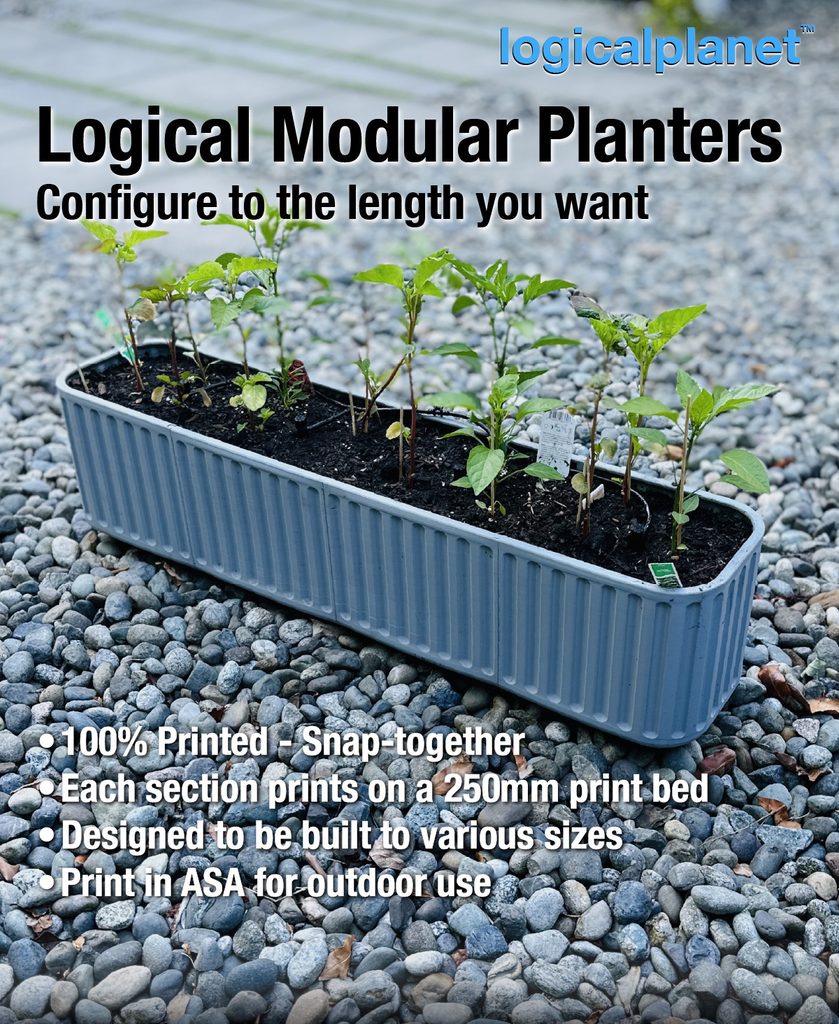
A planter seemed like the obvious solution, but most available designs locked me into one particular size. That felt like an opportunity to do something better: design a planter made from printable sections that could be extended to suit the available space.
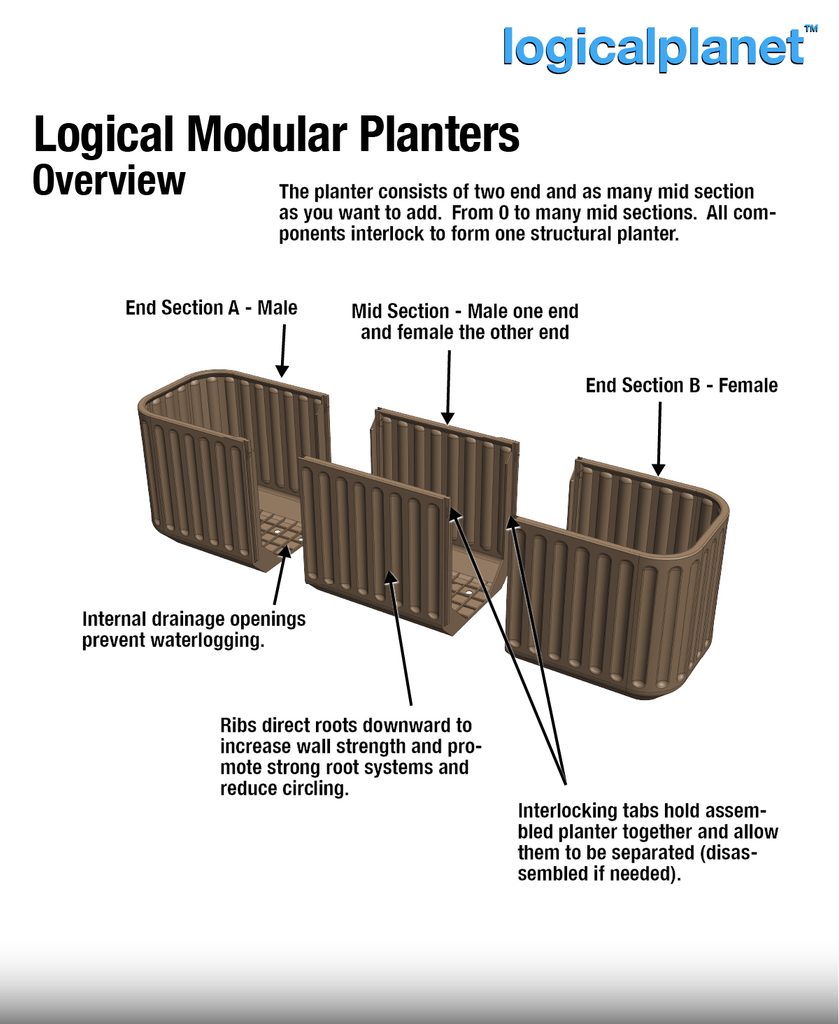
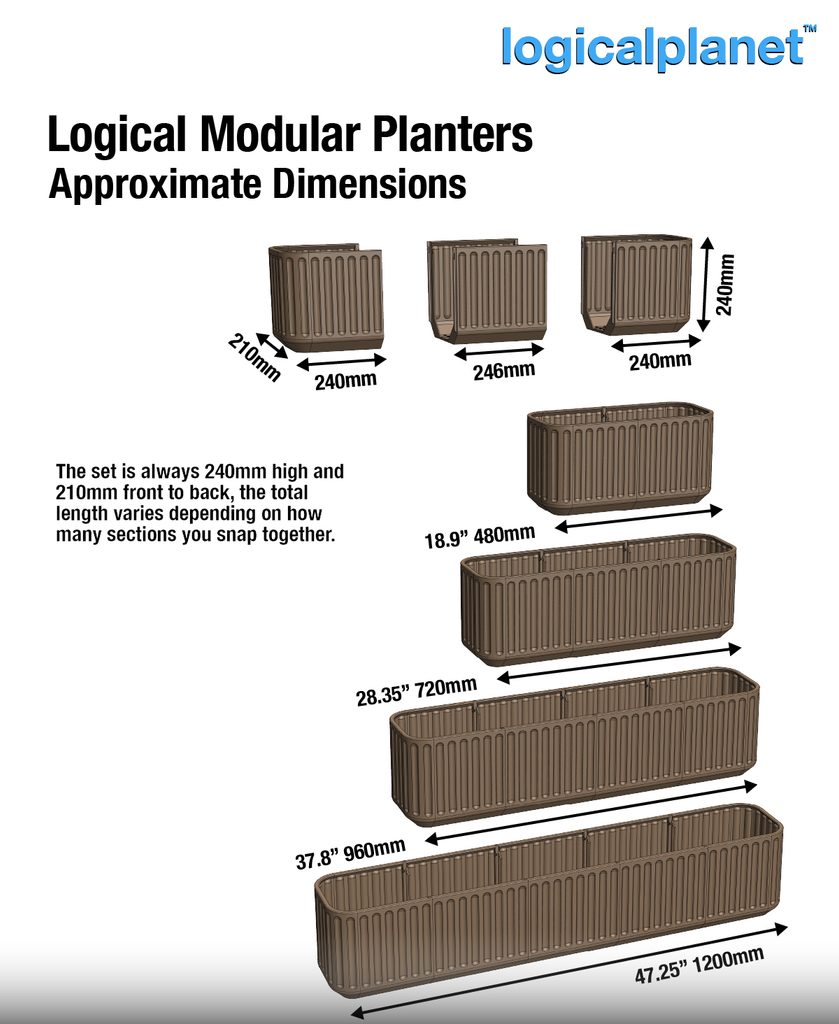
The planter is assembled from two end sections with as many repeating middle sections as needed. Each section is 240 mm high and 210 mm from front to back. A planter made from the two end sections is approximately 480 mm long, with additional middle sections extending it to approximately 720, 960, 1200 mm, or beyond.
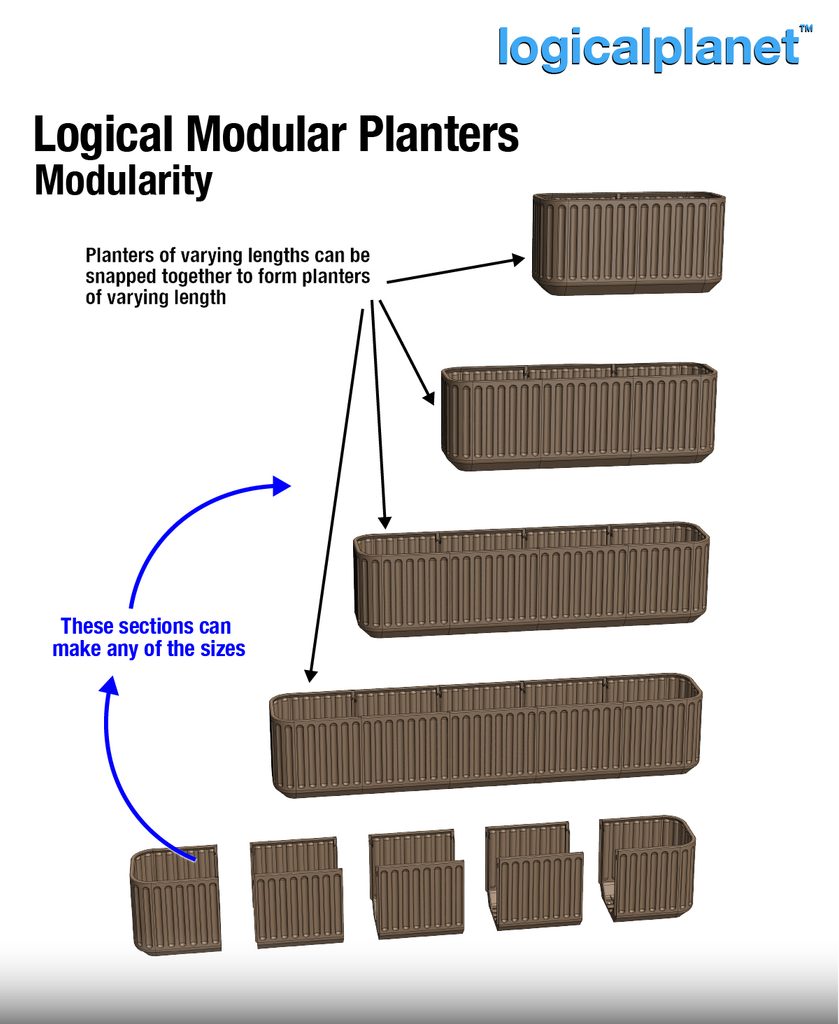
A genuinely modular planter
Each section slides together and is secured using a separate 3D-printed connector at each joint. The planter sections and connectors interlock to form one structural planter without screws, bolts, or other non-printed hardware.
This lets me build the planter to suit the available space instead of trying to make the available space fit a standard planter. The sections can also be separated again if the planter needs to be disassembled.
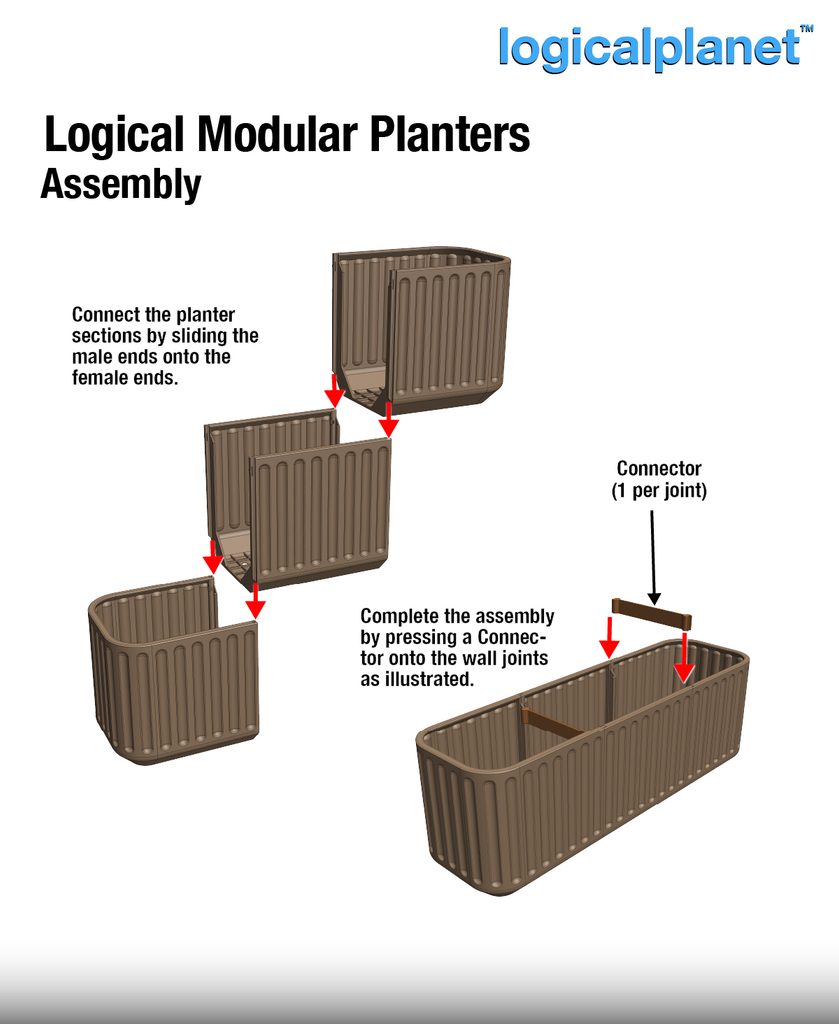
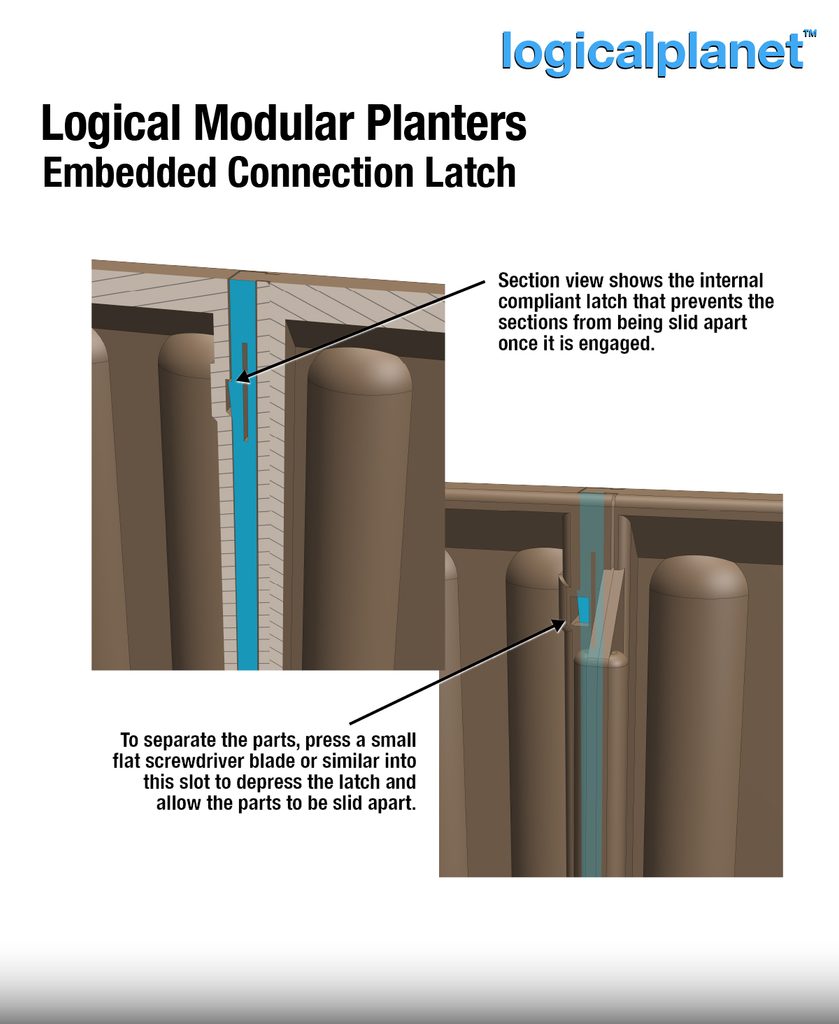
The connector includes an embedded compliant latch that prevents the joined sections from sliding apart once it is engaged. To separate them, the latch can be depressed through the access slot using a small flat screwdriver or similar tool.
Designed with the plants in mind
The ribs add strength to the walls while encouraging roots to grow downward rather than circle around the inside of the planter. Internal drainage openings allow excess water to move through the joined sections and help prevent waterlogging.
The finished planter remains 240 mm high and 210 mm deep regardless of its length.
Printed in sections—by design
A planter longer than the printer’s build plate would normally need to be split and permanently joined afterward. In this case, the division into printable sections is an intentional part of the finished product. Each section is designed to fit on a 250 mm print bed.
The joints, connectors, and repeating middle modules are not simply compromises made to fit the parts on a printer. They are what make the planter adjustable and expandable.
That was the part of this project I found most interesting: creating something that is not merely printable in sections, but actually becomes more useful because it is sectional.
A few important printing notes
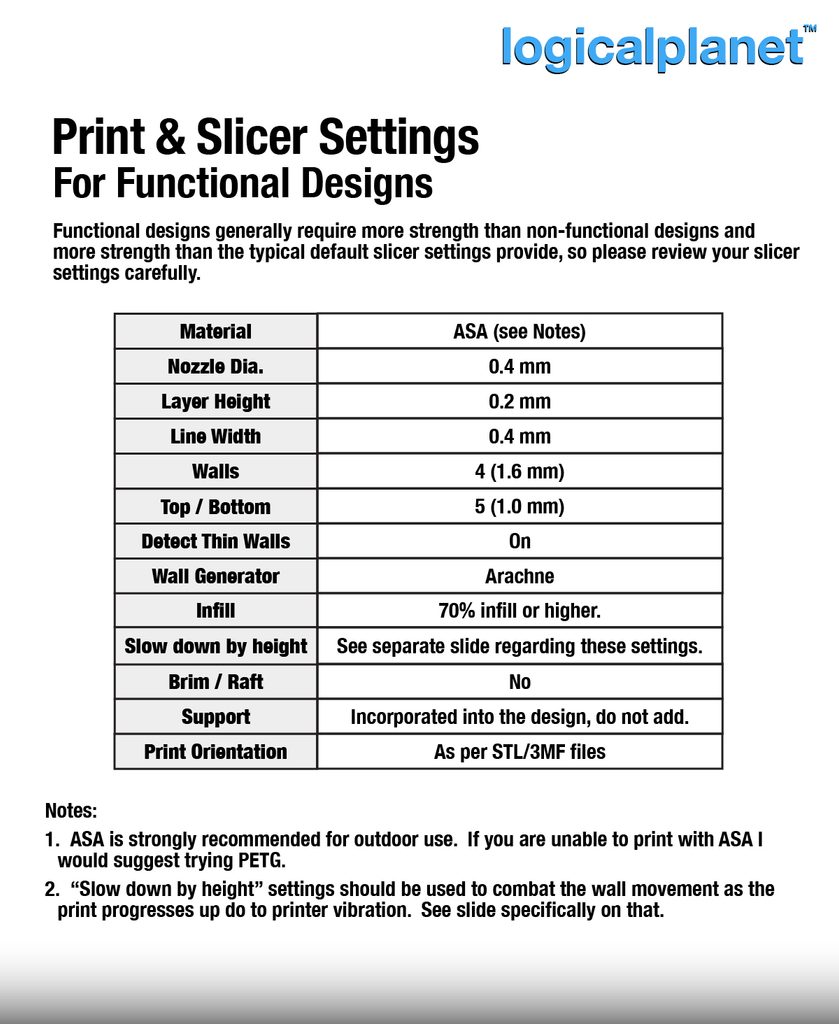
The planter shown here was printed in ASA because it was intended to remain outdoors. ASA is strongly recommended for outdoor use; PETG may be an alternative for printers that cannot print ASA.
The walls are intentionally thin to limit the total material required. The model includes removable print-support sections, so additional slicer-generated supports should not be added.
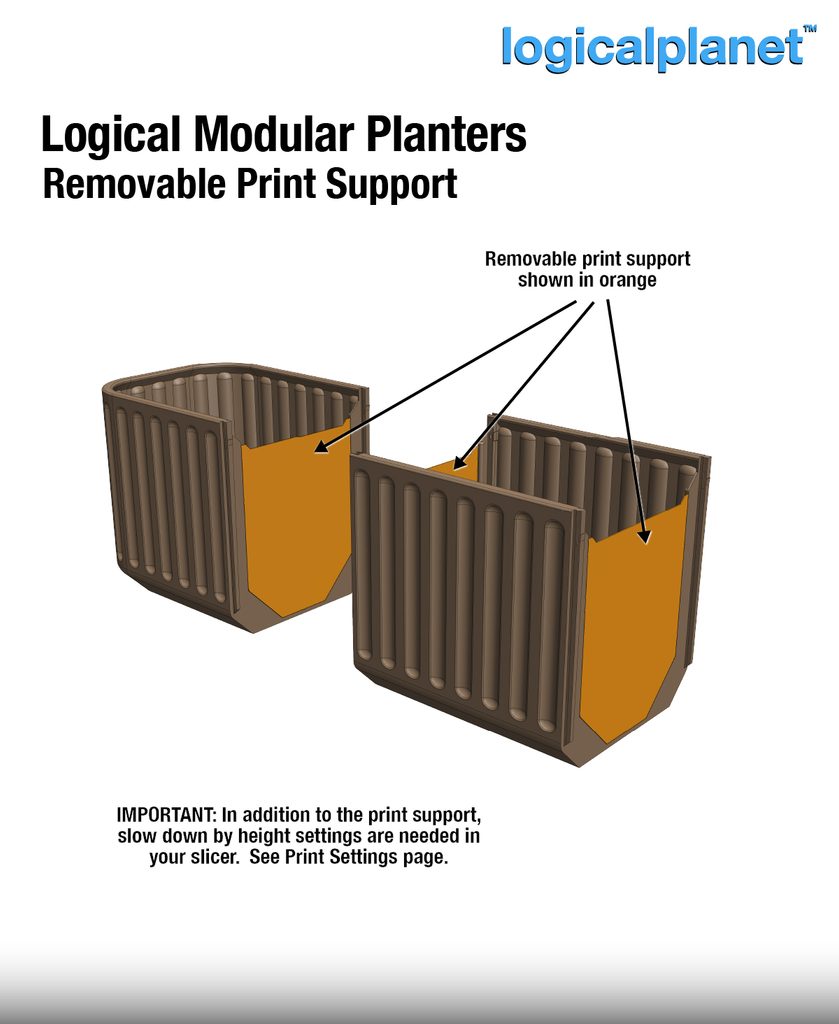
Because the tall, thin walls become increasingly vulnerable to vibration as the print progresses, the supplied slow-down-by-height settings are important. The settings I used begin slowing at 180 mm and transition through to 250 mm.
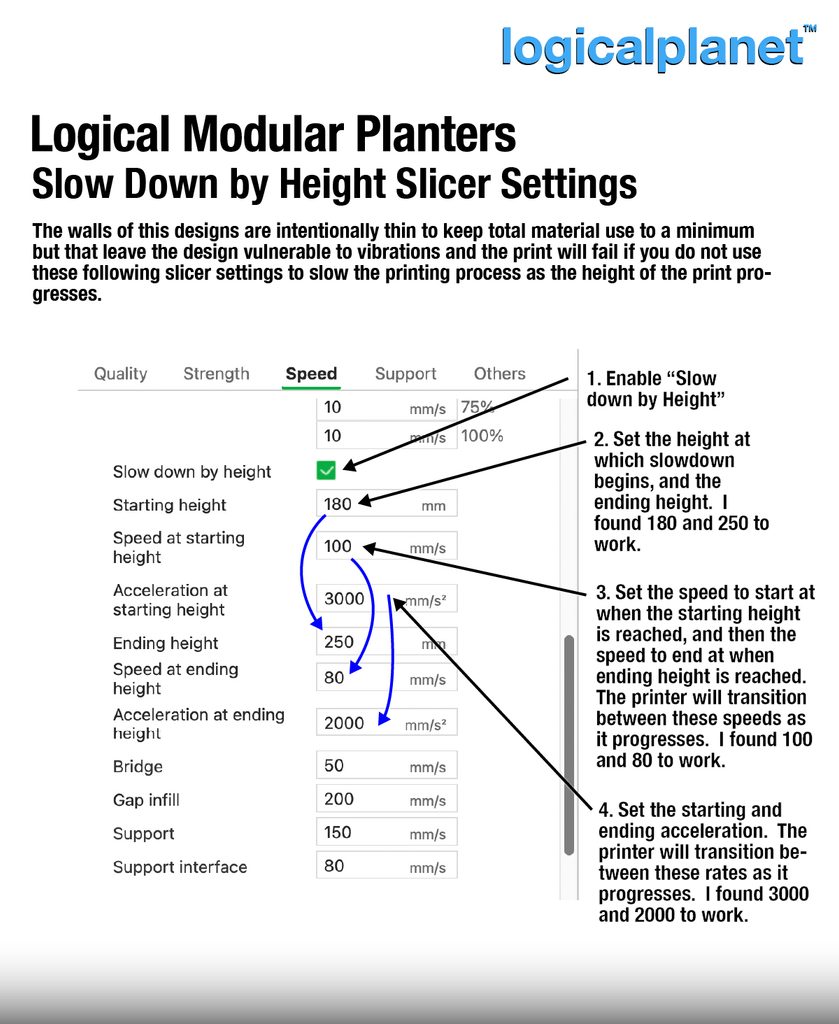
The complete recommended print and slicer settings are shown below and are also included with the model documentation.
Build it for your space
You can start with the two end sections and add middle sections until the planter reaches the length you need. This makes it useful for spaces where an ordinary fixed-size planter would be too short, too long, or simply awkward.
The complete model, printable components, and assembly information are available on Thangs:
Download the Logical Modular Planter System on Thangs
If you print one, I would be interested to see how long you make it and where you use it. You can share a make on Thangs or join the LogicalPlanet community through the links below.
LogicalPlanet community and social links
Questions, comments, or suggested improvements can also be sent to logicalplanet3d@gmail.com.
Leave a Reply